
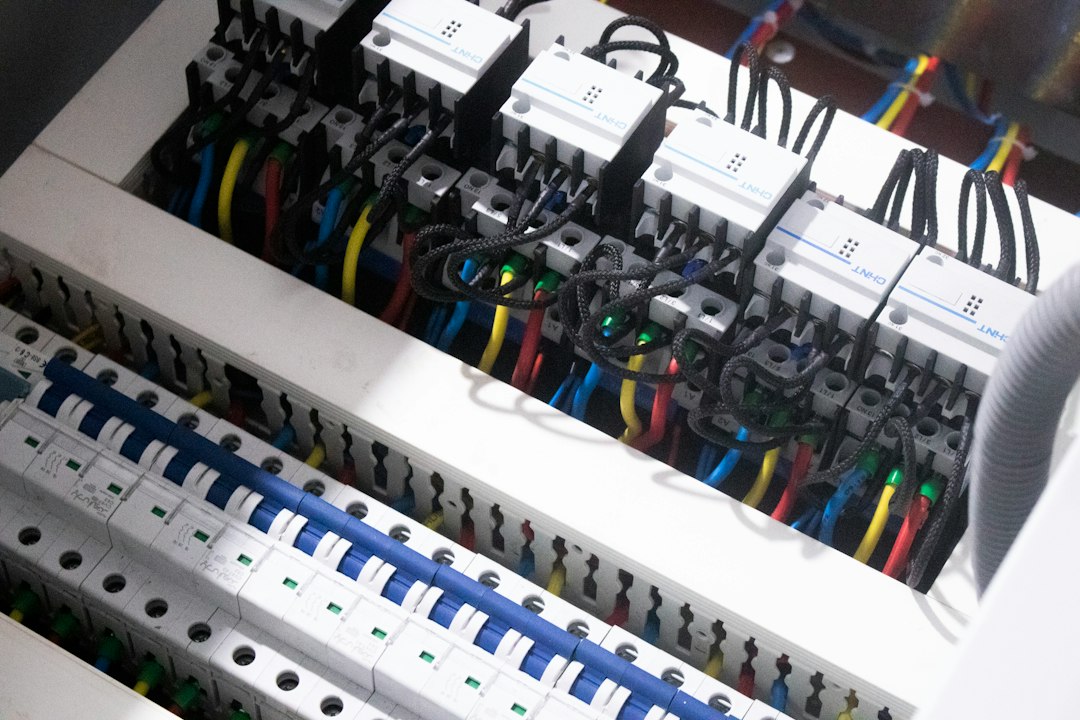
The heart of electrical safety in any home or commercial premises lies in an element that often goes unnoticed until a breakdown occurs: the Main Consumer Unit or electrical panel. This component is much more than a simple box with switches; it acts as the true brain of the electrical installation, in charge of distributing current, protecting electronic equipment against power surges, and, most critically, safeguarding people’s lives against possible electrical leaks or short circuits.
In a city with such a consolidated and historic housing stock as Barcelona, a large proportion of buildings feature installations designed for the energy demands of decades ago. Today, the addition of induction hobs, high-power ovens, aerothermal systems, or electric vehicle chargers requires a load level that obsolete electrical panels simply cannot support. Maintaining old components poses a serious risk of overheating the lines and even causing a fire.
Modernising this infrastructure is a fundamental technical requirement to ensure peace of mind in the property and to comply with the current legal framework. Any update, modification, or new installation must strictly adhere to the safety parameters established in the Low Voltage Electrotechnical Regulations (REBT), whose publication and legal validity are outlined in the Official State Gazette (BOE) under the guidelines of the Ministry of Industry and Tourism.
Given this scenario, at JAG Alcaide, we assume an unwavering technical commitment to excellence and safety in every intervention. Our comprehensive knowledge of the electrical sector and the structural particularities of the city allows us to tackle the replacement, optimisation, and certification of any electrical panel in Barcelona with absolute rigour. We thoroughly analyse the existing wiring section and the simultaneous power required to design modern, efficient configurations that are fully prepared for the challenges of today’s electrical consumption.
What is an electrical panel and what elements make up a Consumer Unit according to regulations
The operational core of any domestic or commercial electrical installation responds to the technical acronym CGMP (Cuadro General de Mando y Protección), commonly known as an electrical panel or consumer unit. Far from being a mere junction box, this device fulfills a critical dual mission: safeguarding people’s physical integrity against direct or indirect electrical contacts and protecting the property’s assets by preventing overheating that could lead to fires.
Under the requirements of the Low Voltage Electrotechnical Regulations (REBT), a modern, approved consumer unit must obligatorily integrate the following modular mechanisms:
- Main Circuit Breaker (IGA): Monitors the overall power demanded and cuts off the supply if the maximum thermal limit of the installation is exceeded or a general short circuit occurs.
- Surge Protection Device (SPD): A key element required by technical regulations that diverts sudden voltage spikes (such as lightning strikes) to earth and neutralises sustained fluctuations from the distribution network.
- Residual Current Device (RCD): Constantly measures the incoming and outgoing current. With a standard sensitivity of 30 milliamps in homes, it disconnects the circuit in milliseconds if it detects earth leaks, preventing electric shocks.
- Miniature Circuit Breakers (MCBs): Individually protect each internal line (10 A for lighting, 16 A for general sockets, or 25 A for high-power appliances like ovens and ceramic hobs).
The technical gap between a modern consumer unit and the old porcelain fuse boxes or discontinued black thermal switches is enormous. Obsolete systems lack surge protectors, do not allow for the isolation of faults by independent circuits, and have tripping times that are too slow or non-existent in the event of minor electrical leaks. Current standardisation on DIN rails ensures self-extinguishing materials, simultaneous omnipolar disconnection, and an immediate response to any network anomaly in Barcelona.
When is it mandatory or advisable to change the electrical panel in Barcelona
Barcelona’s housing stock features a large number of older properties whose electrical installations do not meet current energy demands, making the replacement of the main consumer unit a safety priority or a legal imperative.
There are unmistakable symptoms that warn of the degradation of the internal components of the panel:
- Continuous tripping of protections: When the Residual Current Device (RCD) or Miniature Circuit Breakers (MCBs) trip frequently without connecting additional appliances, there is usually an insulation fault or an overload on the lines.
- Overheating and unusual smells: Noticing the plastic is hot to the touch, hearing continuous electrical buzzing, or detecting the smell of burnt bakelite requires urgent intervention to prevent short circuits or potential fires.
- Technical obsolescence: Panels that still have old lead fuses, wooden bases, or lack an independent Main Circuit Breaker (IGA) violate basic protection measures against power surges.
Modernising a home requires an electrical infrastructure capable of absorbing high energy peaks. During a comprehensive renovation or when integrating sustainable technologies such as aerothermics, solar photovoltaic panels, or an electric vehicle charging station, the electrical panel must be reconfigured. These loads require dedicated circuits, specific types of RCDs (such as Type A or Class B), and permanent and transient surge protectors in accordance with the Low Voltage Electrotechnical Regulations (REBT).
Technical adaptation ceases to be optional for certain official procedures with the distribution company:
- New electrical connections: Properties where the supply has been disconnected for more than two months.
- Power increases: Expansions of contracted power that exceed the maximum permissible capacity reflected in the previous file.
- Installations older than 20 years: Major contractual modifications.
In all these cases, it is mandatory to issue a new Electrical Installation Certificate (CIE or Boletín Eléctrico), duly processed before the Directorate General of Energy of the Generalitat de Catalunya, a procedure that requires the panel to comply strictly with current regulations.
How much does it cost to change an electrical panel: Prices and quote factors
Renewing the electrical control panel of a home represents a technical investment focused on regulatory safety and the service capacity of the installation. The final amount balances the qualified labour of an authorised installer—essential for certifying compliance with the Low Voltage Electrotechnical Regulations (REBT)—and the quality of the switching and protection components from top brands such as Schneider, Hager, or Legrand.
In general terms, the indicative rates are divided according to the scope of the intervention:
- Basic replacement of the electrical panel (up to 5 circuits): €350 – €550, aimed at small homes with basic electrification.
- Complete installation with surge protection (high electrification): €600 – €950, required in properties with air conditioning, induction hobs, tumble dryers, or aerothermal systems.
- Processing and issuance of the Electrical Certificate (CIE): €120 – €200, necessary if a power increase is required or if the installation is over 20 years old and the distribution company requests the update.
The exact price depends on variables specific to the property:
- Number of circuits and network type: A three-phase installation requires tetrapolar circuit breakers and RCDs, which are significantly more expensive than conventional single-phase models.
- Need for building work: If the existing panel is old and small, it is usually necessary to chisel the wall to embed a larger capacity box (minimum of 18 to 24 modules), which adds fixing and plastering tasks.
To guarantee complete transparency and avoid cost overruns, a closed professional quote must detail in writing the removal of the obsolete panel, the exact brand and range of the mechanisms (specifying whether the RCDs are Type A or super-immunised), the mandatory inclusion of permanent and transient surge protectors, and the technical verification of earth tripping before commissioning.
Safe installation process and technical regulations in homes and businesses
Replacing or assembling an electrical protection panel demands a rigorous technical methodology to guarantee the integrity of individuals and the stability of the connected receivers. This technical procedure is articulated in four essential operational stages:
- Safe disconnection and power cut: The supply is interrupted at the individual branch, ensuring a safety lockout to prevent accidental manoeuvres and verifying the total absence of current at each terminal using approved measuring instruments.
- Redesigning the single-line diagram: The distribution and amperage of the Miniature Circuit Breakers (MCBs) and RCDs are defined based on the loads of each circuit (climate control, power, lighting, and wet areas), adapting to the technical requirements of the Low Voltage Electrotechnical Regulations (REBT).
- Dressing and wiring of circuits: The conductors are routed cleanly and orderly using insulated busbars and standardised ferrules. It is essential to apply the manufacturer’s recommended tightening torque to avoid false contacts and hot spots that could degrade thermal insulation.
- Verification and tripping tests: The sensitivity and response time of the protections are evaluated using a calibrated multi-function tester, certifying that the residual current devices disconnect in the event of 30 mA leaks within regulatory margins.
Parallel to the technical execution, regulations require that these modifications be carried out exclusively by duly authorised electricians. In Barcelona, the validity of the Electrical Installation Certificate (CIE) or boletín is decisive in any eventuality. Home and business insurance policies condition the coverage of damages caused by power surges, short circuits, or fires on the installation being backed by an accredited professional and complying with current regulations.
Maintaining the core of the installation in perfect condition represents one of the smartest and most profitable decisions for any property owner concerned about their home. An updated electrical panel goes far beyond mere compliance with strict current regulations; it constitutes the main barrier that protects people, the home, and equipment against short circuits or sudden alterations in supply. By modernising this essential component, daily energy consumption is directly optimised, eradicating inefficiencies or small leaks derived from components worn by the passage of time.
This structural improvement, whose investment usually ranges between €350 for basic interventions and €950 in high electrification scenarios with comprehensive surge protection, notably increases the value of the property in the Barcelona market. Guaranteeing the immediate response of each residual current device stops any risk of fire due to wiring overheating in its tracks, providing invaluable peace of mind on a daily basis. Furthermore, a well-dimensioned and protected network prevents annoying power cuts when connecting several high-power appliances at the same time. Investing in a modern infrastructure is, ultimately, opting for continuous well-being and the total protection of the home.
At JAG Alcaide, we place our team of authorised installers at your complete disposal to assess the actual state of your system. Request a comprehensive technical diagnosis now and a no-obligation quote to renew your electrical panel in Barcelona. We take care of the entire technical and administrative process, guaranteeing clean, efficient work that is approved under the highest safety standards.
Preguntas frecuentes
❓ When is it legally mandatory to upgrade my electrical panel in Barcelona?
It becomes mandatory when you need to register a new electrical connection (if disconnected for over 2 months), increase your contracted power beyond the current permitted capacity, or update a major installation older than 20 years. All these require a new Electrical Certificate (CIE) and full compliance with REBT regulations.
❓ How much does it cost to change a consumer unit or electrical panel?
A basic replacement (up to 5 circuits) generally costs between €350 and €550. For complete installations with mandatory surge protection in highly electrified homes, prices range from €600 to €950. Issuing the required Electrical Certificate (CIE) typically costs an additional €120 to €200.
¿Necesitas ayuda profesional en Barcelona?
En JAG Alcaide te ofrecemos presupuesto sin compromiso. Nuestro equipo de profesionales está a tu disposición.